


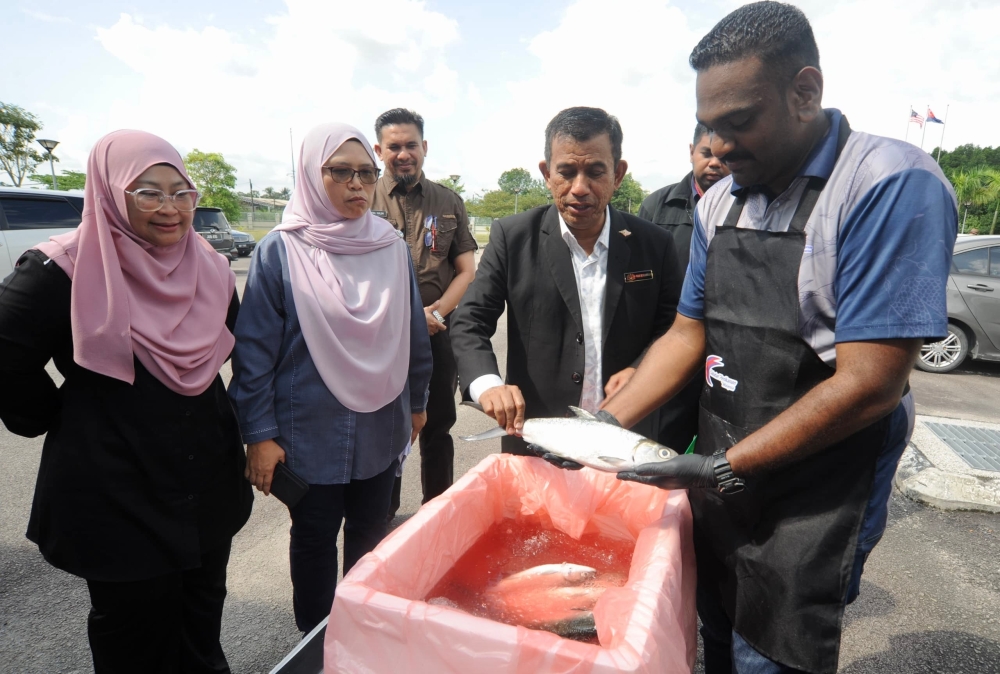
ISKANDAR PUTERI, June 5 — The Fisheries Department has confirmed that mussels from the waters of Port Dickson in Negeri Sembilan are still unsafe for consumption.
Fisheries Department deputy director-general (management) Wan Muhammad Aznan Abdullah said this was based on the latest sampling results, which still show high levels of biotoxin content in the mussels.
He explained that the latest analysis also found that the toxin readings were decreasing and approaching the set standard rate of 800 parts per billion (ppb).
“The Fisheries Department will continue to conduct water and mussels sampling from the area every two weeks to detect the presence of dangerous biotoxins.
“We will continue to monitor the readings until they return to normal levels and the mussels are again safe for consumption,” he told reporters after launching the Aquaculture Tasting Programme and Johor Fisheries Excellence Awards 2024 at the Johor Fisheries Department complex here today.
Wan Muhammad said the Fisheries Department will also supervise the mussel ban with the Domestic Trade and Cost of Living Ministry to ensure that contaminated mussels and shellfish from Port Dickson are not sold.
He was commenting on the updates on the current ban on mussels in Port Dickson since early April.
Last month, it was reported that laboratory analysis found harmful algae that caused mussels in Port Dickson waters to be contaminated and unsafe for consumption.
On the improvement of the water quality in Port Dickson shores, Wan Muhammad said the initial biotoxin reading when the case started was between 20,000 to 30,000 ppb, exceeding the set standard.
He said the latest readings taken were found between 900 to 1,000 ppb in some areas around the waters and were approaching normal levels.
“However, we do not want to take any risks and the ban on mussels and shellfish in the area is still in enforced to protect the public,” he said.
Wan Muhammad said that the Negeri Sembilan and Federal governments have also handed out compensation in cash to about 45 shellfish farmers whose income has been affected.
“This situation does not affect the production of mussels in the country as Port Dickson is not the main producer,” he said, adding that Johor remains the main producer of mussels in the county.
On April 4, the Fisheries Department confirmed that laboratory analysis detected harmful algae that caused mussels in Port Dickson waters to be unsafe to eat.
Checks and tests showed the mussels harvested there had been contaminated by biotoxins and the Prorocentrum, Alexandrium and Pseudo-nitzschia algae species.
This follows eight cases of food poisoning on April 2, believed to have been caused by eating mussels from the popular resort town.
